Stage III: Advanced
Martinism and Reintegration
To understand reintegration as the restoration of the fallen human being, and through it of creation, and to weigh the outward theurgic operation against the inward way of the heart.
“Because strait is the gate, and narrow is the way, which leadeth unto life, and few there be that find it.”
- Stations
- 6
- 5 marked chapters · 1 book
- Episodes
- 5
- 3 h 42 min in full, across 4 of 5 timed
- Of marked passages
- 16 min
- Where each station opens; listen on as long as you like
The route
6 stations, walked in order
The Christian theosophy of Martinez de Pasqually and Louis-Claude de Saint-Martin: the fall of Adam into fragmentation, the Lurianic parallel of shattered vessels and repair, Christ as the model of theurgy, the anointing at the Jordan, the narrow middle way, and Saint-Martin's interior way of the heart.
Keep each station as you finish it
Your place is kept in this browser alone.
Station IListen· Kept
Name the problem of reintegration
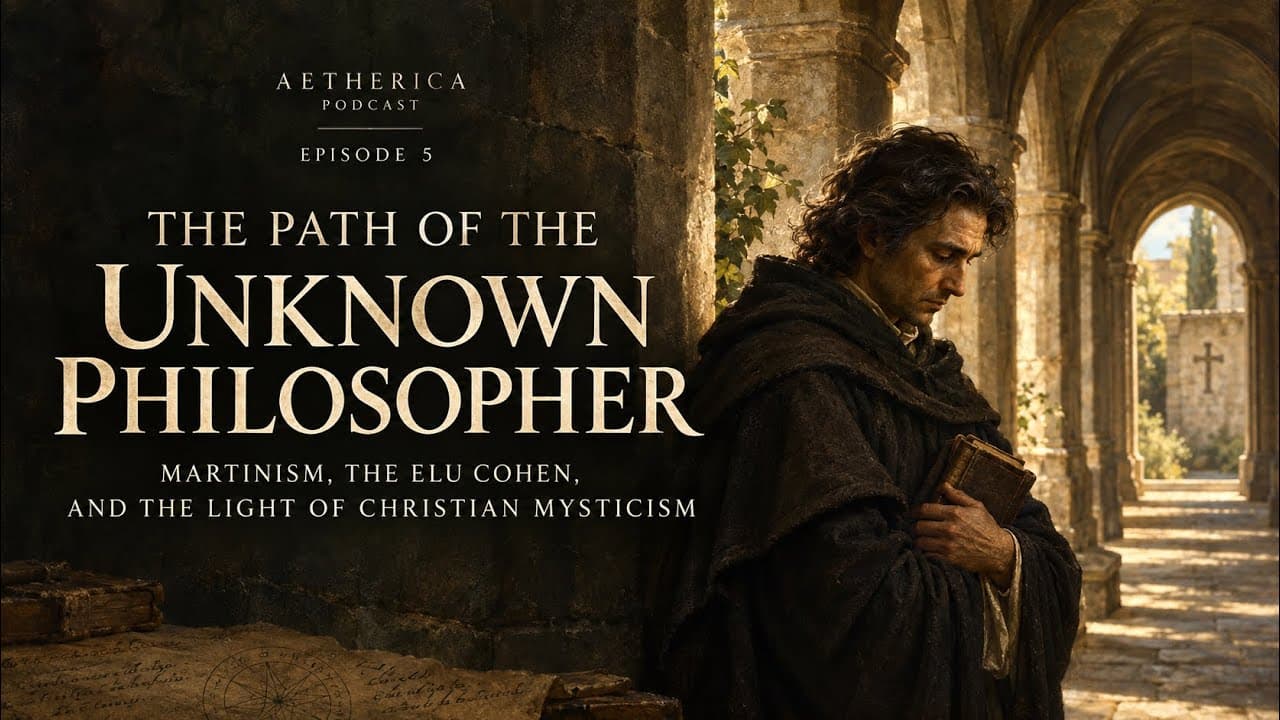 Episode 5The Path of the Unknown Philosopher — Martinism, the Elu Cohen, and the Light of Christian MysticismLands on Gnostic parallels, Lucifer, and fallen materiality Listen from 22:047 min chapter
Martinez de Pasqually's account of the fall, as set out in his Treatise on the Reintegration of Beings: the absolute emanates hierarchies of spiritual beings; the first of them prevaricate, with Lucifer at their head, and are cast into materiality; Adam is created as their overseer, to help reconcile them, and is himself tempted and falls. The host reads that fall as a unified consciousness broken into divided individualities that forget their origin. The work of the Élus Coëns is to drive the hostile agents out of one's own sphere and outward through the cosmos, for here, as in Kabbalah, evil is overcome by being made good, not cast aside.
Sit with this
If evil is overcome by being made good rather than cast aside, what in yourself have you tried to cast aside that might instead be rectified?
Station IIWatch· Kept
Gather the scattered sparks
 Episode 24The Midrash& Magik, Creative Potencies, and The Grimiore TraditionLands on Tzimtzum, Broken Vessels & Tikkun Watch from 30:332 min chapter
The Lurianic myth on its own terms: the infinite light contracts in the tzimtzum to make room for creation, the vessels of the sefirot shatter under the inpouring light, and sparks of the divine presence remain in the broken shards. A second creation is built on that rubble, and the trapped light is released only through tikkun, the repair of the world, by prayer and good deeds.
Sit with this
Set the Lurianic repair beside Martinez de Pasqually's reconciliation. Where do the two accounts agree, and where must they be kept apart?
Station IIIListen· Kept
See Christ as the theurgic model
 Episode 16Lilith , Magic vs Logic, and the Society of 8Lands on Pagan theurgy and Neoplatonism influences Listen from 22:211 min chapter
Researching the Golden Dawn's sources, the speaker finds it drawing directly on Agrippa, Ficino and Plotinus, and behind them on a pagan line, Iamblichean theurgy, Proclus, Plotinus and Plato, all describing a theurgic process of divine ascent. That trajectory, he argues, finds its most perfect form in the story of Christ. Christ is the theurgic model, what happens when the work is accomplished perfectly, and the Christic force is set firmly apart from the rules of institutional religion.
Sit with this
If Christ is the theurgic work accomplished perfectly, which part of that work belongs to the rite, and which can only be done in the heart?
Station IVListen· Kept
Understand the anointing
 Episode 2Power, Heresy, and the Evolution of the Church ( Ike Baker | Sky Mathis )Lands on Baptism, anointing, and the Holy Spirit Listen from 23:504 min chapter
Christos means anointed, and in a world without widespread soap anointing was itself an act of cleansing and purification. The washing of Christ in the Jordan by John the Baptist, and the descent of the Spirit, are read by one of the hosts, himself a cleric in a Gnostic church, as the moment Jesus becomes the Christ, his ego and the perceptions tainted by materiality set aside. The early-January feast of the Basilidian Gnostics is connected in the conversation with the baptism, when the Spirit descends.
Sit with this
If the baptism marks the moment the man becomes the Christ, what would an initiation that truly changed you have to set aside?
Station VListen· Kept
Walk the narrow way
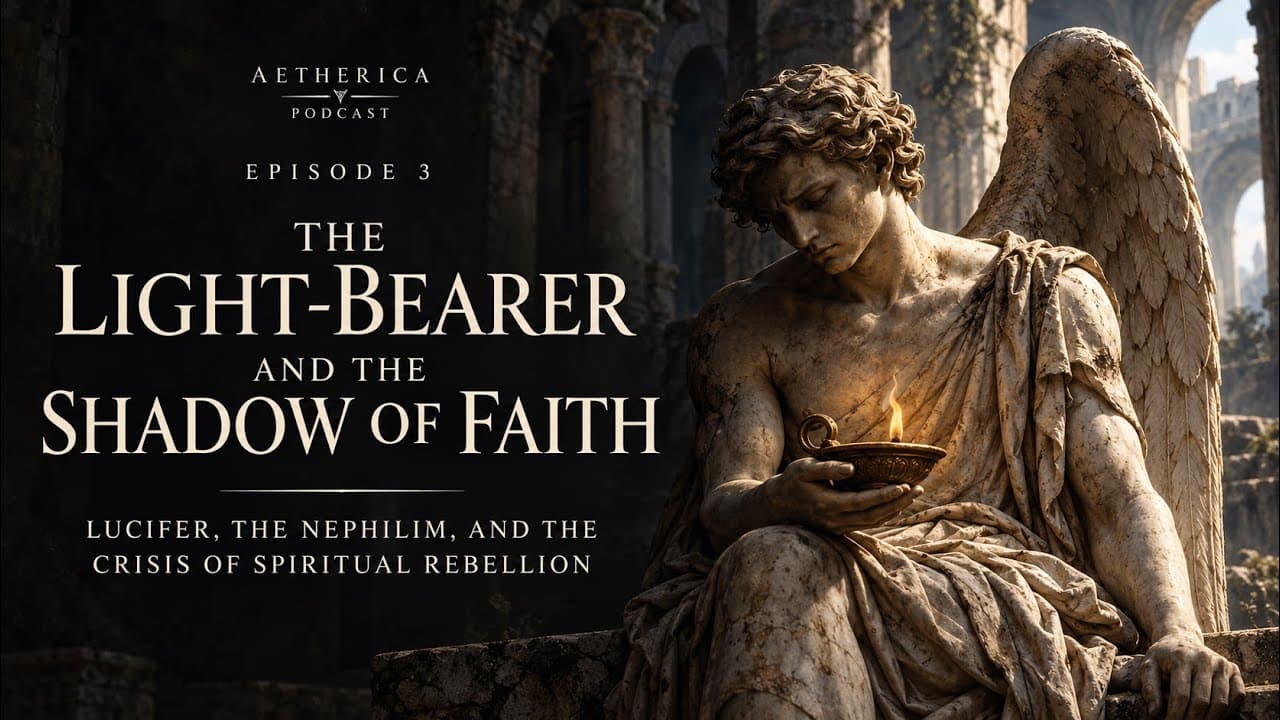 Episode 3The Light-Bearer and the Shadow of Faith — Lucifer, the Nephilim, and the Crisis of Spiritual RebellionLands on The middle path, balance, and true sacrifice Listen from 28:172 min chapter
Between the Luciferian and Molochian extremes examined earlier in the episode, the middle pillar, the path of mildness, is described as the true sacrifice: the death of the old nature and rebirth to the new, the balance of active and passive in the alchemical marriage of Sol and Luna. This is called the path of reintegration, and the saying on the strait gate and the narrow way is recalled.
Sit with this
What would choosing the path of mildness cost you this week?
Station VIRead· Kept
Read the Unknown Philosopher
Read alongside
Of Errors and Truth (Des erreurs et de la vérité)
Louis-Claude de Saint-Martin
Saint-Martin's first book, published in 1775 under the name of the Unknown Philosopher and written against the materialism of his age. The Martinism episode calls it the primer, the first book to read for anyone drawn to Martinism: big and heavy, but the place to begin; it also urges the reader to take up Martinez de Pasqually's Treatise on the Reintegration of Beings. The episode's closing chapter tells how Saint-Martin asked whether an interior rectification could do without the swords, circles and floorcloths of the operations, withdrew from the Élus Coëns, and took the way of the heart.
Sit with this
Read a chapter before any commentary on it. What does Saint-Martin mean by error, and what by truth?
End of the route · its last question goes with you