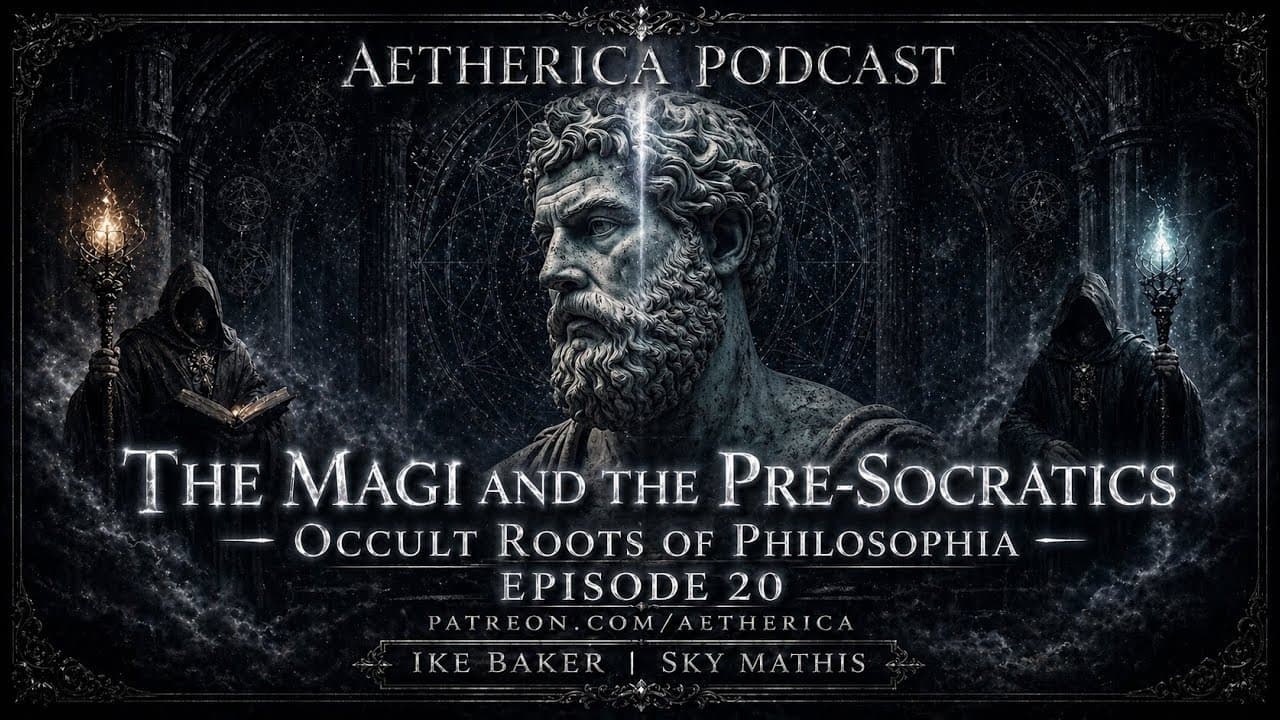
From there, we turn toward the Magi—the priestly astronomical cultures of ancient Persia and Mesopotamia. We examine what the word magos originally meant, how priesthood, astronomy, ritual, and philosophy existed as one discipline, and how these traditions developed through Chaldean, Babylonian, Sumerian, and Zoroastrian currents.
The conversation also explores
- Zoroaster and the refinement of priestly religion
- the relationship between the Avesta and Vedic traditions
- omen observation as the foundation of early astrology
- priest-astronomers as the first scientists
We then move into Empedocles, his healing practices, purification rites, and the origin of the four classical elements—earth, water, air, and fire—which would become foundational to later occult, alchemical, and philosophical systems.
The latter half focuses deeply on Pythagoras: his initiations in Egypt, his school at Croton, the discipline of silence, memory training, music, moral exercises, and why mathematics became one of the great spiritual revelations of antiquity.