Episode 25

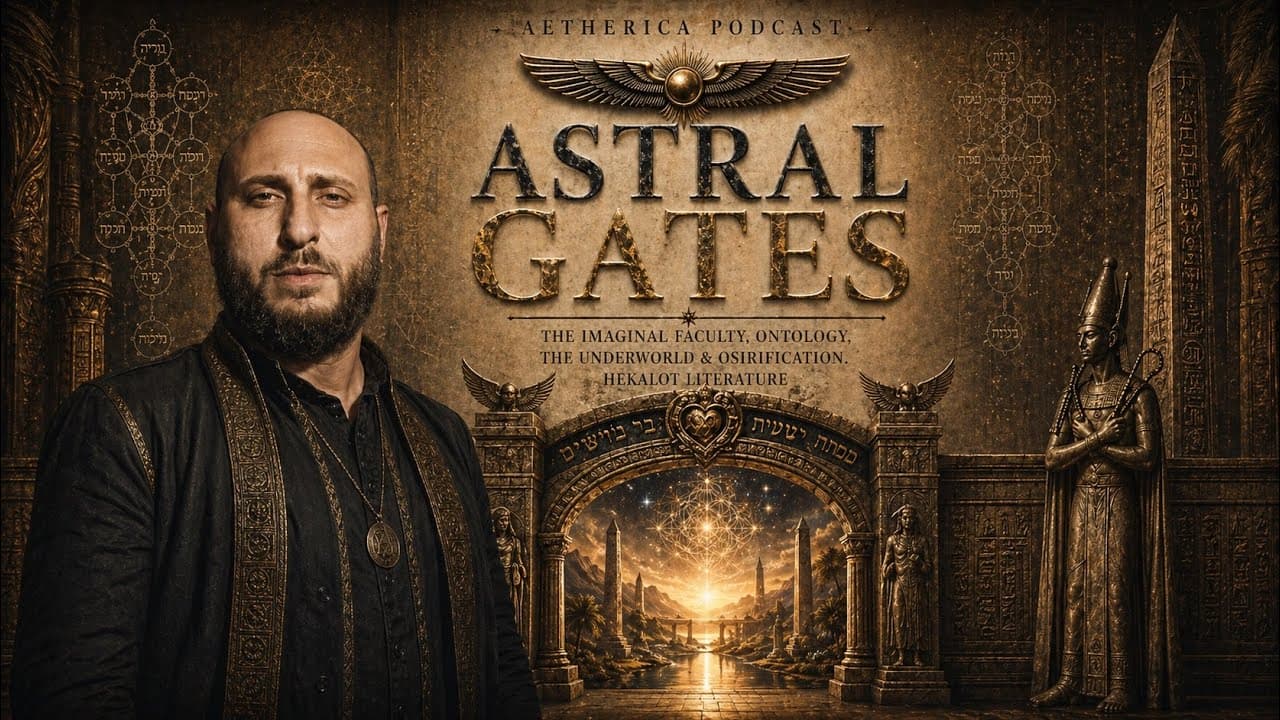
Hekalot Literature, Astral Gates, Imaginal Faculty, Ontology, The Underworld & Osirification

Hosted by Sky Mathis and Ike Baker

30 chaptersFull transcriptVideo

Show notes

The conversation

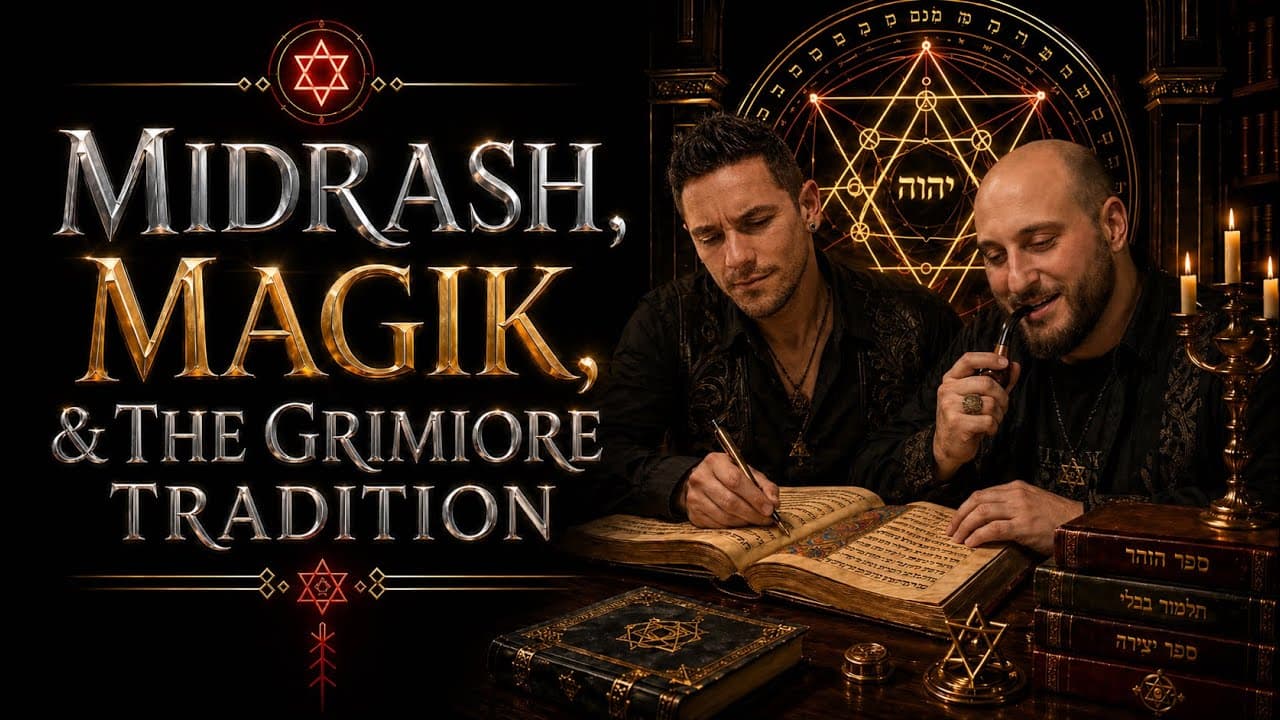
In this episode of Aetherica, Sky Mathis and Ike Baker continue their exploration of the hidden architecture beneath Western esotericism — moving through Kabbalah, Merkavah mysticism, Egyptian funerary texts, astral ascent, Osirification, initiation, and the construction of the body of light.

The conversation opens with a powerful comparison between the Kabbalistic Tree of Life and the theurgic model of ascent. Through the path from Malkuth to Yesod, the discussion explores why the soul must first descend inward before it can ascend upward. This leads into the alchemical formula of V.I.T.R.I.O.L., the underworld journey, astral travel, and the inner movement through the imaginal faculty.

Read the full notes

From there, the episode moves into the relationship between Merkavah mysticism, Hekhalot literature, and older currents of underworld descent found in Orphic, Pythagorean, Homeric, and Egyptian traditions. Ike explains how the “descent” language of the chariot mystics can be understood as an inward passage into the astral or imaginal plane — the realm where the soul learns to move beyond ordinary sensory consciousness.

The conversation then turns toward Egyptian funerary texts, including the Book of Gates and the Book of Coming Forth by Day, and how these traditions may be understood through the survival and ascent of consciousness after death. This opens into a profound discussion of the ontological chain of the self, disembodied beings, imaginal communication, astral gateway images, the shells of the dead, and the symbolic vocabulary needed to encounter spiritual realities safely and coherently.

A major portion of the episode is devoted to Osirification — the ritual formula by which the candidate symbolically dies, is dismembered like Osiris, and is reassembled through an initiatic and alchemical process. This becomes a key to understanding initiation itself: the symbolic death of the lower self, the dissolution of the psyche, the elemental purification of the candidate, and the eventual reconstitution of the self under the power of Spirit or Quintessence.

Topics include

  • The Tree of Life as a map of theurgic ascent
  • Malkuth, Yesod, the Moon, and the path of Tav
  • V.I.T.R.I.O.L. and the descent into the interior earth
  • Why the soul must descend inward before ascending upward
  • Merkavah mysticism and Hekhalot literature
  • Chariot ascent, astral travel, and the imaginal faculty
  • Orphic, Pythagorean, Homeric, and Egyptian underworld traditions
  • Egyptian funerary texts and the survival of consciousness
  • The Book of Gates and the Book of Coming Forth by Day
  • The ontological chain of the self
  • The body of light, the luminous body, and the “egg body”
  • Disembodied spirits, astral planes, and imaginal communication
  • Astral gateway images and symbolic vocabularies
  • Homer, caves, the underworld, and material incarnation
  • Persephone, Hades, and the mystery of embodiment
  • Osirification as initiatic death and reassembly
  • Alchemical initiation and the dissolution of the lower self

From the episode’s public YouTube description.

Chapters and transcript

The movements of the conversation

30 chapters, with the full transcript beneath them. Choose a time to start the video there. Open a chapter to read what is said in it.

  1. Watch from 0:00Intro & Tree of Life as a Model of Ascent
    Read

    0:00any thoughts on like how those two things kind of cross uh — this is why I think the the cabalistic tree of life is one of the best ways the one of the it's probably the better way to to conceptualize the whole theoric model because I don't know if you can see but you've got Malcou here where we start in Earth right and then You've got Yod that corresponds to Lavana, the moon. We know that spatially we're moving upward and outward. This path here that connects them, the path of towel, that's

  2. Watch from 0:43Descent into the Underworld Before Spiritual Ascent
    Read

    0:43the underworld. So to get to get from the earth to the moon, you know, in in the modern cabalistic kind of correspondence to move upward, you have to go downward inward first. There's a couple of things there. You've got right vitri uh the whole uh vitrial of the alchemist visita interior terra you know visit the interior of the earth in you know uh um rectific and there in rectifying you will find the hidden stone. Um, now there was there's a part where the theater just must go inward. The soul must enter in in you

  3. Watch from 1:27Inner Experience, Astral Travel, and the Soul’s Journey
    Read

    1:27you go and I talked about this with Elliot Saxon on the last podcast I did with him for for Brave New History. You you go inward first to go to to begin the ascent. Um, and so that's something I've really worked out just by practical experience, which is really important. You have to enter the underworld of what we call like the astral. You close your eyes, meaning you shut out this world and you you recede into interiority because you know what's traveling is not the body. What's traveling is the soul,

  4. Watch from 2:06Shutting Out the Physical World to Enter the Imaginal
    Read

    2:06right? These guys didn't think they were getting on on actual chariots and spaceships and riding out, you know, to to the moon and to the sun. It was an analogy, you know, but they they they probably did think that their soul was traveling to these places um using the imaginal faculty. uh and then and thereby right getting on that level first, getting on a soul level rather than an a purely intellectual level, dissociating from the the the mundane concerns of the world and the little things I have here that remind me of

  5. Watch from 2:42Ancient Traditions: Shamanic Descent & Underworld Practices
    Read

    2:42myself. You know, this oh I got that as a gift and I made that over there. These are all connections I have with the exterior world. I have to shut those things out if I'm going to ascend and leave. Um and it's a part and parcel of astral travel as well because we we do find and Danny Newman did a great job in his book theology theory and practice. He talks about the Orphic and even the Pythagorean uh hadabatic descent that that precedes Socratic philosophy. They were more interested in shamanism. They had they

    3:16went inwards first. Uh they actually they didn't even really ascend. They only went into the underworld. And there was a great dark goddess there that you know um they communed with and they found healing and they spoke to the spirits of the dead for purposes of divination you know. Um but it's later that it's like oh we can do more with this spiritual technology than just remain in what modern oultists call the lower astral the astral realm. You can rise. You can ascend to that mental

  6. Watch from 3:48From Lower Astral to Higher Spiritual Realms
    Read

    3:48realm. You can ascend to the you know the the higher spiritual realms. And that's um you know that that that's where that changes. So the going down is actually entering into the astral which means shutting down the senses and the locus of your consciousness is now in the imaginal and that's the activation of soul and it's from there that that this thing travels and there's a whole there's a whole tradition of you know the avoid you know the egg body they call it the luminous or radiant

  7. Watch from 4:25The Body of Light and Astral Construction Practices
    Read

    4:25body Ago in Greek means egg. Uh — like the orphic the orphic egg. — Yeah. I mean it could be related to me. I mean modern practitioners call it the body of light. — Oh yeah. — They had they had a whole technique of constructing this astralic body that would take them on into immortality without having to sacrifice their their waking consciousness. Now that's theurgic. That's also in line with the merkaba. what the Merkoba mystics were doing. — And okay, so in terms So thinking about

  8. Watch from 5:03Comparing Merkaba Mysticism and Egyptian Funerary Texts
    Read

    5:03like this descent terminology in terms of the Merkoba mysticism of the Hebrews, how could we weigh this up against things like Egyptianerary texts like the book of gates or the book of coming forth by day or things like this? Is there some pretty heavy crossover as well? Yeah, I think absolutely that time spent in the underworld, it's all talking about the same thing. And the the trouble is that it would it would take another hour for me to explain to people — Yeah. — that might be listening what is

  9. Watch from 5:37What “Entering the Underworld” Really Means
    Read

    5:37happening. You know, a lot of people read this stuff and they're like, "Okay, they entered the underworld." Like, what do they just like go into a cave and like what happened? They take hallucinogenic drugs. Well, sometimes, but really the the spiritual work as it and and we know because it's like we're working this [ __ ] now. It's not a dead tradition. It's a living tradition. This stuff is going to continue until the whole [ __ ] shebang's over. You know, it's it keeps finding its way

  10. Watch from 6:07The Ontological Chain of Being and Consciousness
    Read

    6:07through. It keeps surviving. Um, but disembodied. So, so remember I was talking about how we have that chain of of that ontological chain, the hennad of the self of which my my physical body is the lowest or densest expression. — Mhm. — Parts of you exist diffused throughout this chain. Now when you this is this is and and you know the the ancients didn't believe that consciousness was like we we say now in in the modern uh vernacular an emergent property of the physical organ of the

    6:48brain. They didn't think that you know the cons consciousness was part of what went on you know it resided in us for a time and left us when the physical body was not of use. And that's kind of like saying this onlogical chain of of being descends downward and then the lowest manifestation is my body. My physical body is the densest. It's the bottom part of that. Okay. When the body dies, the ontological chain is still there. It kind of recedes from the body. It's still there but its lowest manifestation

All 30 chapters
  1. Watch from 7:30Death, Consciousness, and the Persistence of the Self
    Read

    7:30is no longer present in the world. The physical material is gone. It's it's subject to decay. But the the the onlogical, you know, the chain of being, the hennad of the self which descended and animated that body is still there. And and consciousness still exists in that that spectrum of low to high. And so it's never gone. It's never gone. When you're alive, you have those aspects of yourself. When you die, you rely on them more. And it can be very confusing for the recently deceased because they they

    8:10didn't take the time in their in their waking life, in their their physical life to get in touch with those. It's like having different limbs that you didn't even realize you had. And it's like, well, now I got to learn how to move these things. you know, the I I wish I would have learned them sooner when I was a baby and I could have been coordinated by adulthood. So, um uh that said, disembodied beings have that onlogical chain. Disembodied intelligences have that onlogical chain, but they're

  2. Watch from 8:40Meeting Disembodied Entities in the Astral Plane
    Read

    8:40disembodied. They do not possess that lowest densest uh manifestation. And we do and we possess everything quote unquote above it. So we meet those disembodied entities at the same level in our own onlogical hierarchy of consciousness which is to say it is in my imaginal faculty not imagination because it's not made up. It's plastic. It's malleable. It's it's yet right yet meaning formation. It's there it's this thing to be formed like this raw matter of this blueprint which will

    9:25you know use the laws of physics in order to construct something by its pre-existent pattern. That's what yet is. It's the blueprint of reality. Um and so you that is really where we meet disembodied spirits, lower entities, cathonic entities, the husks or shells of the dead. um you can interact with those things using the same part of the onlogical we call them the planes you meet them on the astral plane because that's they don't have anything lower than that you know so it's like I have

  3. Watch from 10:02Symbolism, Imagery, and Communication with Spirits
    Read

    10:02that I exist in that plane with them in my own onlogical chain of being so what I'm going to do in order to communicate with them because I can't see them in the physical room typically um especially from somebody who's not developed those faculties. I'm going to shut down the part of me that associates with physicality and I'm going to recede into the imaginal faculty of my my psyche where I will be able to meet them. Now the issue is a lot of us have not you know there is no form and and

    10:37what we have to do is we have to use an agreed upon image usually called from you know uh the practitioner are available imagery. It's like images we have here. So you might get like big bird talking to you, you know, if you've not trained your your mind to preferentially preferentially and automatically select uh uh you know an established esoteric symbolic vocabulary, whether that's Hebrew or whether that's the the the um the tarot or whether that's the the the the symbols of the zodiac, those are packed

  4. Watch from 11:14The Role of Esoteric Symbol Systems in the Astral
    Read

    11:14with information and so that entity can use that as an astral gateway. way, as David Ranking calls it, it can use it as this agreed upon image to communicate more about itself to you because you already understand what that symbol means rather than just like this guy's got a head full of junk. He's got memories. He's got TV shows. He's got uh, you know, who knows what kinky shits in there. How do I appear? How do I get this guy to see me? You know, and some demonic entities, they want you to be

    11:43scared. and other entities, they they want to find the cutest, cuddliest way because they don't want to scare you by showing you, you know, uh any of that stuff. So that's that's really the way in which this is the tradition, you know, this is what it is. We when you go inward you're receding upward in the onlogical hierarchy of the hennad the chain of causality of the hennad of the self and you're you're in that sense you're act you're toggling your consciousness to a

  5. Watch from 12:13Greek vs Egyptian Interpretations of the Underworld
    Read

    12:13different part of that spectrum. Is there any correlatives with the Egyptianerary texts and something like Homer's Iliad in the Odyssey or do you feel like that's like a different um sort of symbolic or archetypal or mythological uh story? I don't really remember all the details to it, but I I do remember there's like a descent into the underworld type thing. — Yeah. Um Apollo leads 12 suitors in or or 12 warriors or some something into the underworld. Um so a couple of different ways to looking at

  6. Watch from 13:08Funerary Texts vs Homeric Underworld Symbolism
    Read

    13:08it. Uh theerary texts theerary texts were they I think they dealt with more purely what we were talking about in the underworld um and how to survive once because they were for the pharaoh you know and the whole job of the priest class that ministered to the pharaoh like because he was a god so he had his own priests because each priest was a devote of a particular god. Pharaoh was God. He has his his own attending priests. Their job was to make sure that he survived the afterlife, which means when the lowest

    13:45portion of his ontological chain of being died, his body, that he knew how to ascend in upward towards the hennad of the self. Or in a lot of instances, they tried to keep the [ __ ] alive. It was like etheric vampirism. They put him in a in a stat they'd put his car in a statue of that looked like him in life and uh and they would feed it food and stuff like that. So there there's a little bit of a of a wonky thing happening there etheric vampirism. But um but I think that's more the

  7. Watch from 14:18The Underworld as Physical Incarnation
    Read

    14:18underworld they were dealing with specifically in theerary text. Whereas in Homer there are certain um interpretations which again Danny Newman does a great job talking about in his book. The underworld is often code for not even code. I don't want to make it sound like uh you know [ __ ] Info Wars here, but it's just the way they thought differently. — They do. We We like to think that you know Game of Thrones and all those shitty shows do a great job at making us feel like humans have thought and acted

    14:51with the same motivations and the same states of mind. uh they haven't you know um it's just a patent fact there are commonalities but those are usually the lower parts of ourselves and uh and these people thought differently and so when they Pfury points it out anytime you see a cave or the underworld in like the homeriic stuff right he talks about on his commentary on the cave of the nymphs from one of the books of uh of of Homer Iliad talks about when you see Homer talking about or in the ancient

    15:26literature generally you see them talking about a cavern they're really talking about manifestation they're talking about the material plane so the underworld in a lot of those texts was where we are now — it wasn't in the earth it wasn't actually cathonic it was from a philosophical interpretation it was talking about physical incarnation into the body Wow. Yeah, I've got a copy of Newman's book on the way, so I'm looking forward to reading what he's got to say about that.

  8. Watch from 16:00Myth of Hades and Persephone as Esoteric Allegory
    Read

    16:00Sounds really interesting. Um, — yeah, and I mean, I've I've talked about it, you know, on on earlier episodes. To me, the best example of that is in the myth of uh Hades and Praphanany. That's the best that's the clearest example. And that's exactly why that those that was specifically that was the myth that was covered in the Elucinian mysteries. — This is probably the best part to ask you. Um what is oerification? Um well, let's let's look at it in terms

  9. Watch from 16:38What is “Osirification” in Initiation Rituals
    Read

    16:38of really you you find that word most commonly used um or you probably would have heard me use it in the context of of an initiatic ritual. Um and it's essentially the oerification of the candidate which is the ritualized um it's symbolic but that it's not just symbolic. There's also something that's happening by way of of this formula because when we work ritual, there are certain ways there are certain things that we do in our physical bodies, the lowest part of that onlogical chain of

    17:16being and there are things that we're doing at higher sections of that chain. And so that's where the magic is taking place in the on on the higher levels of of uh cognizance or or or or consciousness. And so it's not just symbolic, but if you were to see it symbolically, it would look like um a candidate being bound um and uh or in some way in some way the candidate is symbolized as having died. Um so there's lots of ways you can do that. You could put him in a room with skull and crossbones. You could put them

  10. Watch from 18:01Symbolic Death and Ritual Disassembly of the Psyche
    Read

    18:01in a coffin, hopefully spacious. Uh, you know, you could tie them up, tie them, you know, I'm not talking about anything cruel or kinky here, but you just symbolically kind of put a rope around their, you know, bind their hands or something or bind them around the waist and and and you you know, usually darkness, blackness, that is something that is employed uh to symbolize death. And on another level there are certain ritual accutra which are separate. They're individual items. uh that at that point um or a point

    18:48around there around that point when the candidate has been bound and symbolically dead that those things even though they're they're they're separate items they're kind of in the same area they're then moved they're separated um and like in the same way that Osiris was cut into a bunch of pieces and spread all over Egypt um Right. He died. His brother uh uh uh Tonset uh oret puts him in a coffin and then kick, you know, sails him down the the Nile. Um and then I believe he's rescued and sets

    19:32like, "Okay, not happening again." Cuts them up into a bunch of pieces and casts his his limbs to the to the wind, spreads them all over Egypt. symbolically an initiation uh particularly an initiation that is alchemical. Um this refers to the taking apart of the what cabalists would call the ruach the lower ruach. Um a yungian might call it the psyche. you are uh taking apart symbolically and and you know ceremonially the constituent components of the psyche of the candidate their self lowercase s

  11. Watch from 20:14Alchemical Initiation and Rebuilding the Self
    Read

    20:14um and then from there you don't just leave them that way uh you know that would they're at a very vulnerable state at that point because it's you know they're there are certain forces that are are being dissolved but ultimately um they're brought back together uh at least in our tradition in the same ceremony candidate is is almost completely unaware that any of that happened. Um and uh from there the alchemical initiation is catalyzed. It's it's symbolized that you've died to your old

    20:51life and we are taking you apart. The you that you know, not the you that you don't know. you know the ideal self is is the king yet to come you know the once and future king really of your microcosm. So um uh then you work the alchemical grade specifically in the golden dawn each each grade is allotted a uh an element you know empidocally an element earth air water and fire and it's also attributed to a uh a sapphira on the um the lower portions of the tree of life. And so what you do is you you're now

  12. Watch from 21:30Elemental Work and Integration in Esoteric Traditions
    Read

    21:30calling forth to the four in your sphere of sensation um by certain exercises, rope memorizations and the rituals which catalyze these alchemical sort of uh stimulations or um saturations. You're then now working with the elemental parts of the self, the the parts of your psyche that are conveniently grouped into four different um categories. And and that's part of the alchemy. And then you move on when you when you you're ready. Uh and and there's different metrics for that. And

  13. Watch from 22:05Quintessence and Completion of the Initiatory Process
    Read

    22:05um you integrate these things. And then finally uh you you reassemble them under the opaces of the quintessence spirit, the fifth element, you know, that you you little suspected but was there with you the whole time. And that's essentially theification formula. — Beautiful. All right. One last one. So, we're talking about things like the preservation of truth, things like this, and transmission of truth um throughout a lot of these esoteric currents largely throughout time. And um

  14. Watch from 22:41Frederick Hockley and Preservation of Esoteric Texts
    Read

    22:41I had read somewhere or had heard from someone that Frederick Hawkley was largely responsible for the preservation of the manuscript of the Golden Chain of Homer. And it's a pretty cool and important book to me personally. And I think I think I may have heard you mention that name before. Uh so just curious who who was uh Frederick Hawkley. So Fred Hawkley was a Mason in uh in in England in the 1800s. Believe it was the early 18 it might have been the late 1700s as well. who's a contemporary of uh of Kenneth McKenzie

  15. Watch from 23:24Hockley’s Background and Role in Rosicrucian Circles
    Read

    23:24and uh they worked together very closely. Um they were both part of a uh uh well they were they were both in the sphere of rosy masonry of that era and they both participated in uh that that wonderfully mysterious uh short-lived society the society of eight. Um, Hawkley was somewhat of a mentor and a confidant to Kenneth McKenzie. Uh, although there were instances where they had falling outs, but Hawkley was his main thing from the letters that exist was that he was into scrying and uh there were certain very

  16. Watch from 24:10Scrying Practices and Spiritual Protocols
    Read

    24:10interesting things that he he wasn't, you know, and you see this with D. You talk about it's more well it's better well known with D that Edward Kelly was his scrier. Um Hawkley did not scry. He did not have the gift of second sight you know. Um unfortunately but he had housemmaids because he was obviously he had some wealth. Um he had housemaids and they were young women and he preferred that they be virgins, virginal young women that did the scrying for him. He would set the apparatus up and it was very

    24:43very important. His spiritual protocols, his spiritual hygiene for the whole thing was super super important. Uh it was all based in in you know uh Christian invocation, Christian prayer. Um certain liturgies that actually resemble uh exorcisms and and stuff like that. And he he prepared um crystals and scrying mirrors. I think he might have used water too at a certain he did a lot of experimenting. Uh it's interesting that he preserved the golden chain of Homer. I don't recall him having any

  17. Watch from 25:19Influence on the Golden Dawn and Cipher Manuscripts
    Read

    25:19practical interest in alchemy, but he was definitely an antiquarian. Him and Kenneth McKenzie as well. They assiduously preserved texts uh you know and that was like their big thing both of them. Um uh following in the in the shoes of uh Elias Ashol. But um he he was he's considered very foundational to the hermetic order of the Golden Dawn. He's also kind of thrown his name is thrown in the hat for people who may have drafted or influenced the cipher manuscripts that uh that the Golden Dawn actually the

    25:56curriculum and the rituals of the Golden Dawn actually came from. Um there's a book uh it's part of what's by by I think I think they had a bunch of different guest editors. Bob Gilbert was one, Ella Caua was one, but uh it's called Roots of the Golden Dawn. And some of these books are quite expensive. The one particularly on Westcot, um the magical magician, the magical mason, I think that that one's called. It's it's basically a collection of letters and lectures and private papers from from a

  18. Watch from 26:28Hockley’s Writings and Legacy
    Read

    26:28few different people. Uh, and there's one um called the Rosie Christian Seer and that is those are the um the the le the private letters of Frederick Hawkley to I think uh FL Gardner. And so there was a lot of it is just kind you're sifting through it and you're just kind of like there's a lot of [ __ ] here. But some of it is really great. And one of the things he he stands out as somebody who is fairly intrepid. He bottles like a spirit or a demon or something like that. And it's

  19. Watch from 27:01Dangers of Spirit Work and Hockley’s Warnings
    Read

    27:01truly terrifying that the thing like comes through the scrying session into physical. He he he averses that um but the main thing about Hawkley is that he told people repeatedly don't even bother. Don't do this stuff. It's too dangerous. He was very paranoid about demonic influence and uh demonic um uh you he didn't want to commune with them. Uh so his spiritual protocols are are very very rigorous. They're very very Christian. Um but at the end of the day and he didn't do any of the scrying, but

    27:36at the end of the day, you know, he he did tell people he's like, "It's really not worth it. This stuff is too dangerous." He he continued to do it. — Interesting. All right. Um, that was awesome. Do you have any last notes or thoughts that you want to leave people on? — Well, we covered a shitload of ground even for us. So, — yeah, that was great. Um, I don't know. I'm I'm getting close to finishing up this book. Right now, it's going to be called A Formless Fire:

  20. Watch from 28:07Closing Thoughts & Upcoming Book Announcement
    Read

    28:07Rediscovering the Magical Traditions. — That's a good name. Yeah, I took it. I got it from um it's a variation of uh of something in the called an oracles. Uh but also Algus Deainis um and I didn't even realize this until after I selected the name but uh Algus Uzini actually writes I think in philosophy as a writer of rebirth or it might have been one of his his books on orphism but he says that the the the name that they used for hecate in the to refer to hekate kind of um esoterically in the calledanoricles

    28:48was by calling her the formless fire. — That's badass. And are you can we say or not if are you having Travis do the artwork for some of that stuff? — Yeah, he's he's he's excited to do it. He's slated to do it. We've not um so he's got he's he's got some stuff. He's he's putting his art in a gallery at the beginning of this month. So, or next month, February. So, he's focusing on that. And you know, I'm going to to California for PRS and speaking at um at

    29:20uh Saddleback Laguna Lodge in California down there. But um so we're we're going to really get on it and by midFebruary I hope to have the book completely into the publisher and then it's it's kind of on it's on him from there to to give me notes and edit. But the thing is like we've been going whereas like with the the the other manuscript to the the real big publisher that that you helped me on doing the the diagrams and stuff. I sent that whole thing in because that's how they wanted it and now

    29:51they're reading it. So that was a long time to not have any guidance. Um whereas now with with my editor now I think everybody's kind of aware it's Jake. I send him a chapter and he sends me notes. you know, that's a that's a much more manageable way to do that, but I understand that over at the larger publisher, who I'm not going to mention yet. I know I've said it in the past, but I just you know how these things go. Like until the deal is sealed, don't say anything. So, um,

    30:23— with the larger publisher, I understand that like, you know, it's just a bigger machine. So, they they have to do it that way. But, uh, but yeah, Travis is going to be involved. Travis Lawrence, I love his artwork. He is the guy for Tria Prima. You know, he did Angels in Vermillion um uh by Danny Newman. He did Nate Shik's the art for Nate Shik's book, The Great Communication. And hopefully I'm next in line. — Beautiful. Awesome. I'm so excited. All right, brother. Well, another one down.

    30:55Uh appreciate you and um thank you everybody for listening and tuning in and all of your support. Till next time.

    Close chapter 30
Listening paths

Walk this episode in a listening path

One guided path stops here on the way through.

  • Intermediate path

    Station 3 of 6

    Alchemy and Inner Transformation

    Die before you are rebuilt

    Osirification: the initiatory formula in which the candidate is bound, kept in darkness or otherwise shown as dead, and which is more than symbolic, since what is done in the body answers to work at higher levels of consciousness. The ritual implements are then separated as Osiris was cut apart and scattered, and the components of the lower Ruach, the psyche, are taken apart. They are gathered again in the same ceremony, and the elemental grades of the Golden Dawn, each allotted an element and a Sephirah, carry the alchemical work forward.